What is actually inside?
Every ingredient, seasoning, oil, allergen, and additive should be visible before purchase.
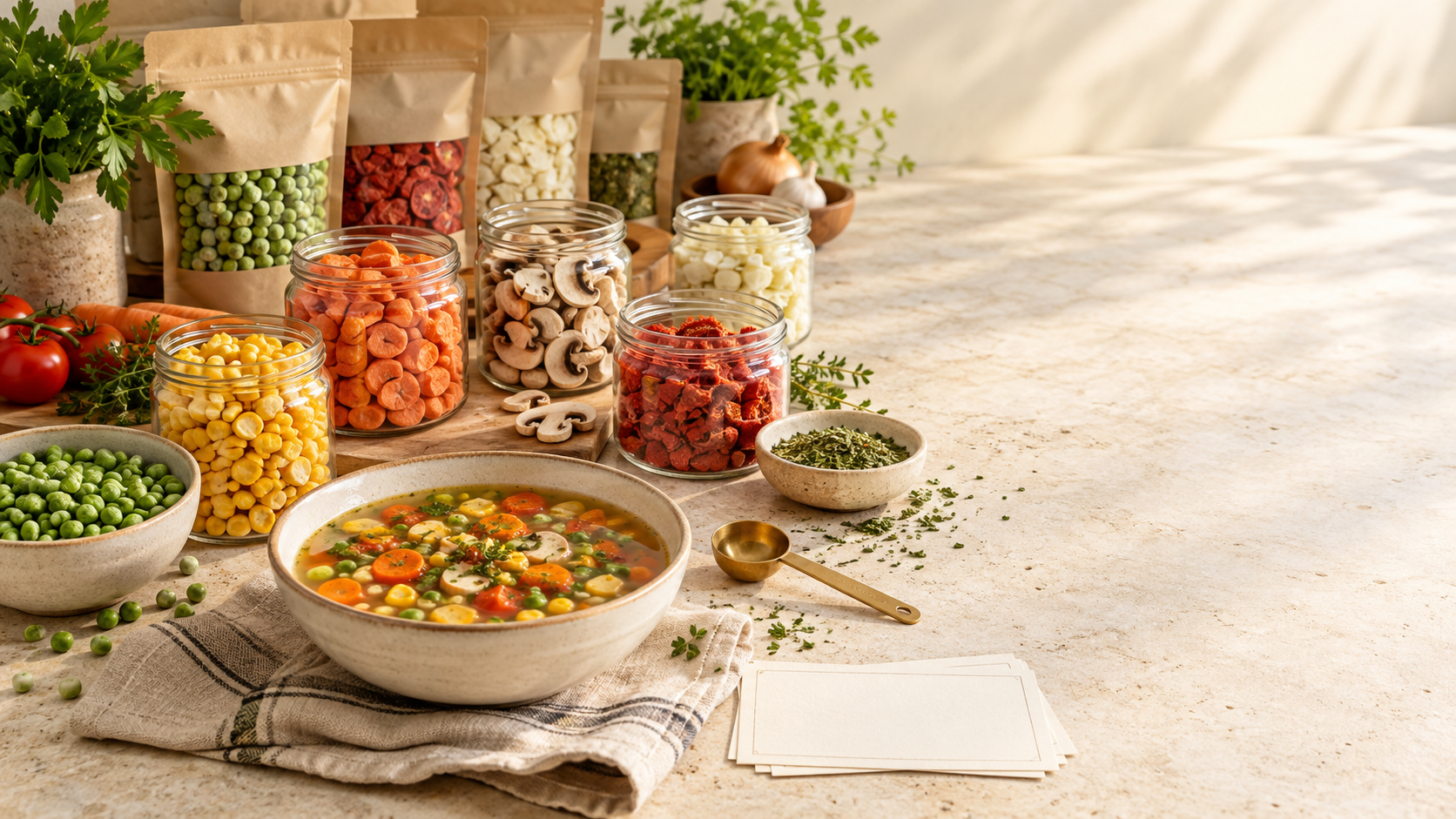
A pantry built by flavor
Vegetables, mushrooms, aromatics, broths, and herbs selected around one question: what can this add to dinner?
01 Clear ingredient lists
02 Practical prepared yield
03 Product-specific storage
04 Authorized supply only
The opening pantry
These unbranded briefs define the assortment. Branded listings, prices, inventory, and checkout appear only after written supplier approval and document review.
The bowl builder
Use this planning tool to assemble a simple pantry meal. The final water, time, cooking, allergen, and storage instructions must always come from each package.
Choose a format and flavor direction to see a three-part ingredient plan.
How we read a pouch
A useful listing separates the dry product from the prepared result and keeps every dietary, nutrition, storage, and shelf-life statement tied to the actual manufacturer.
Every ingredient, seasoning, oil, allergen, and additive should be visible before purchase.
Cut size and fines affect measuring, texture, and the way an ingredient works in a recipe.
Dry net weight and maker-stated prepared yield stay separate. Serving counts need a defined serving size.
Water, soak time, simmering, final cooking, and after-opening storage come directly from the label.
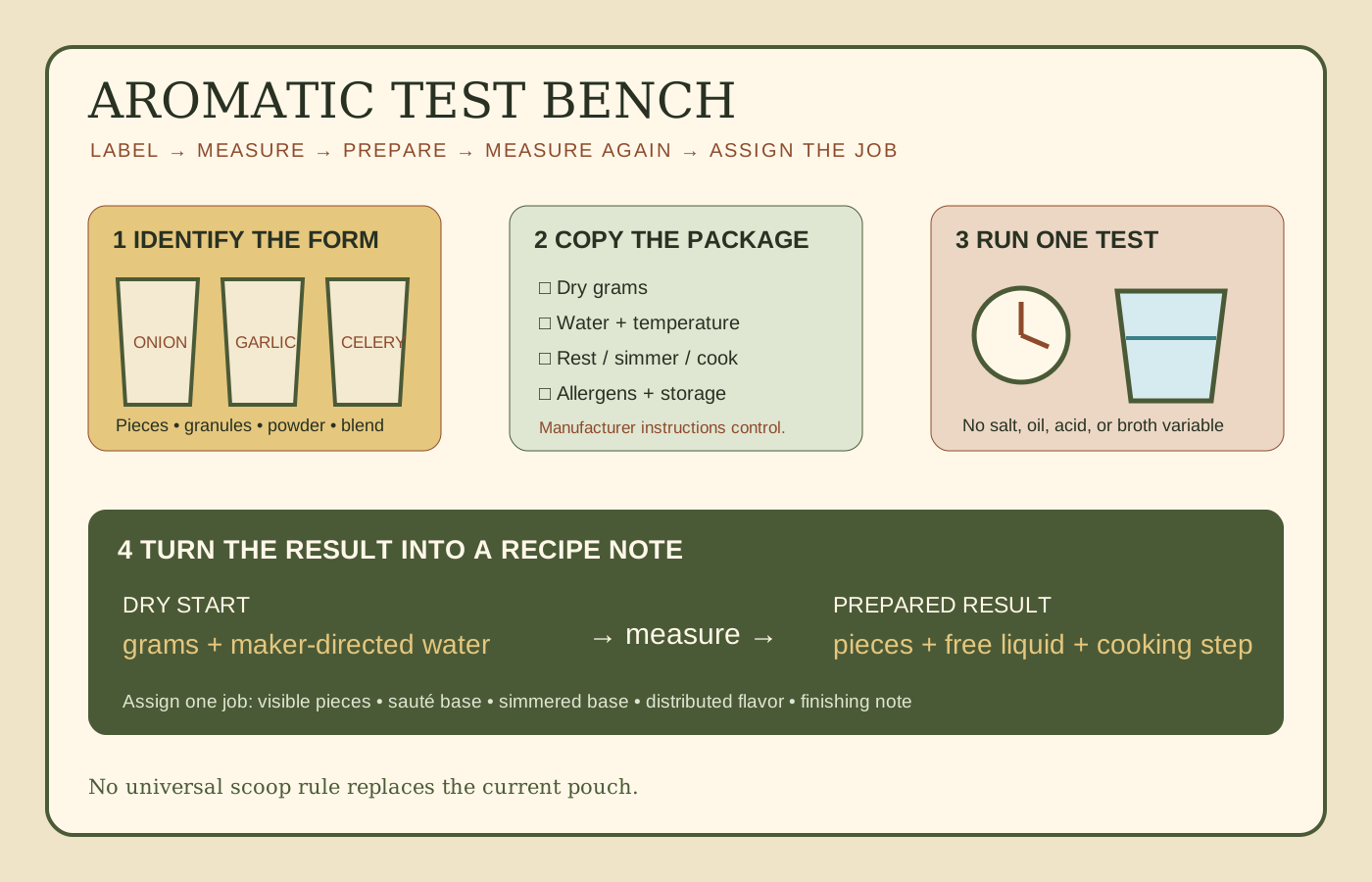
Pantry notebook 005 · October 29, 2026
Pieces, granules, powders, and blends do different jobs. Copy the package, measure one portion, and convert recipes from prepared yield rather than a universal scoop rule.
Open the aromatic test card →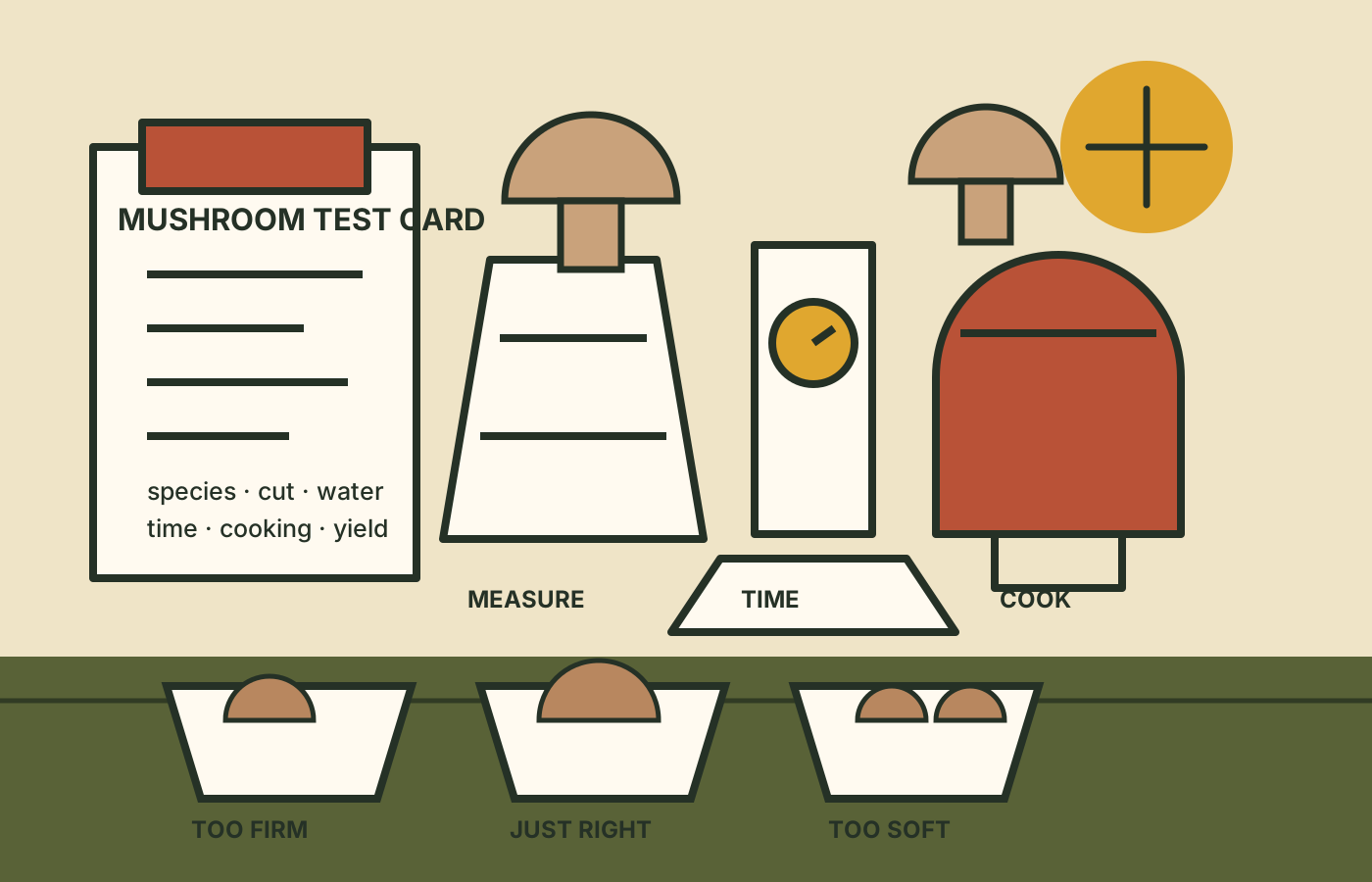
Pantry notebook 004 · October 20, 2026
Species, cut, fines, cooking status, and prepared yield all change the bowl. Run one label-first test before converting a fresh-mushroom recipe or saving the liquid.
Open the mushroom test card →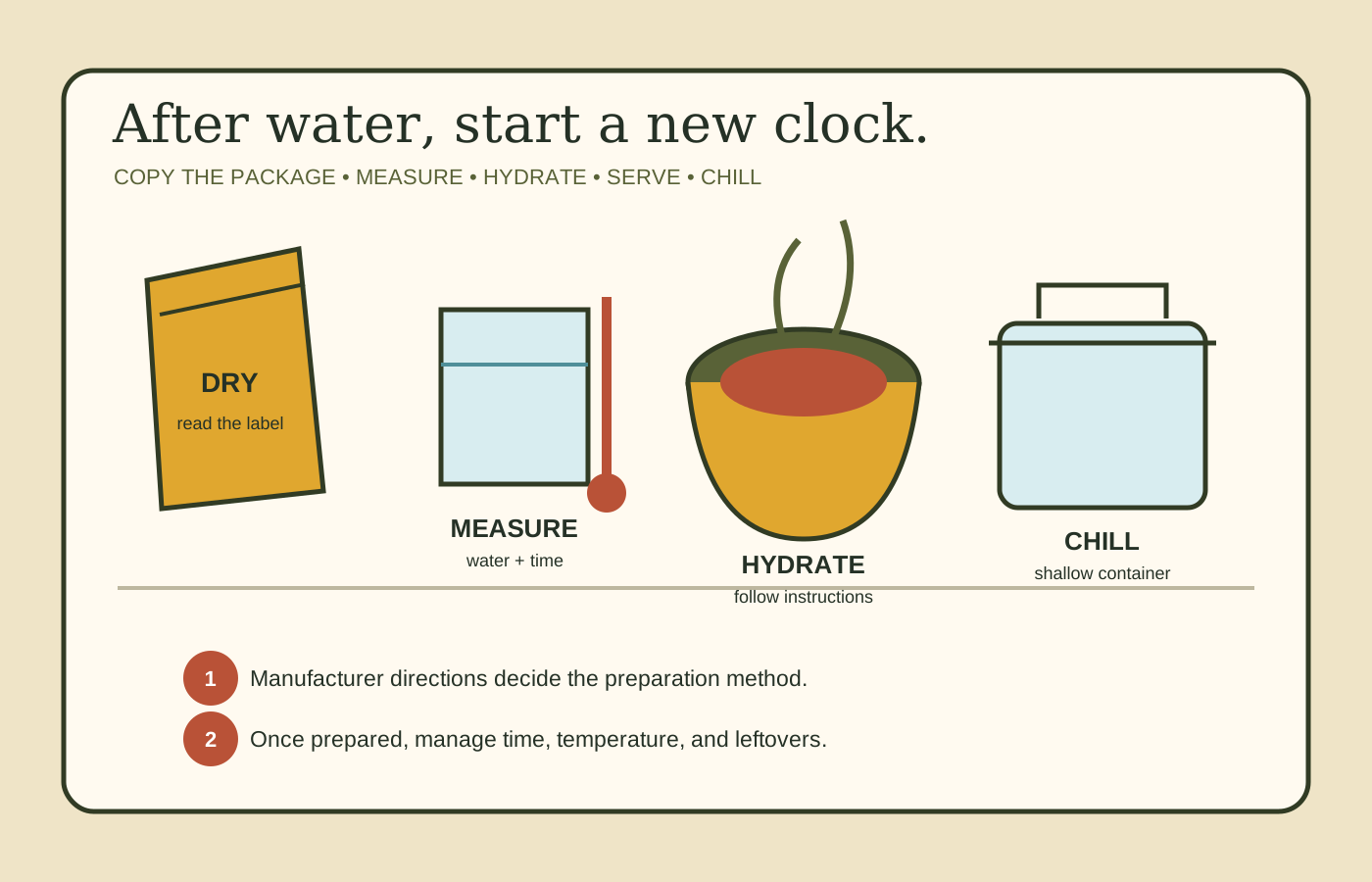
Pantry notebook 003 · October 15, 2026
The 2026 FDA Food Code now expressly tells retail food establishments to follow manufacturer instructions for commercially packaged dehydrated food. Use the same label-first habit at home, then manage prepared food by time and temperature.
Run the safe rehydration workflow →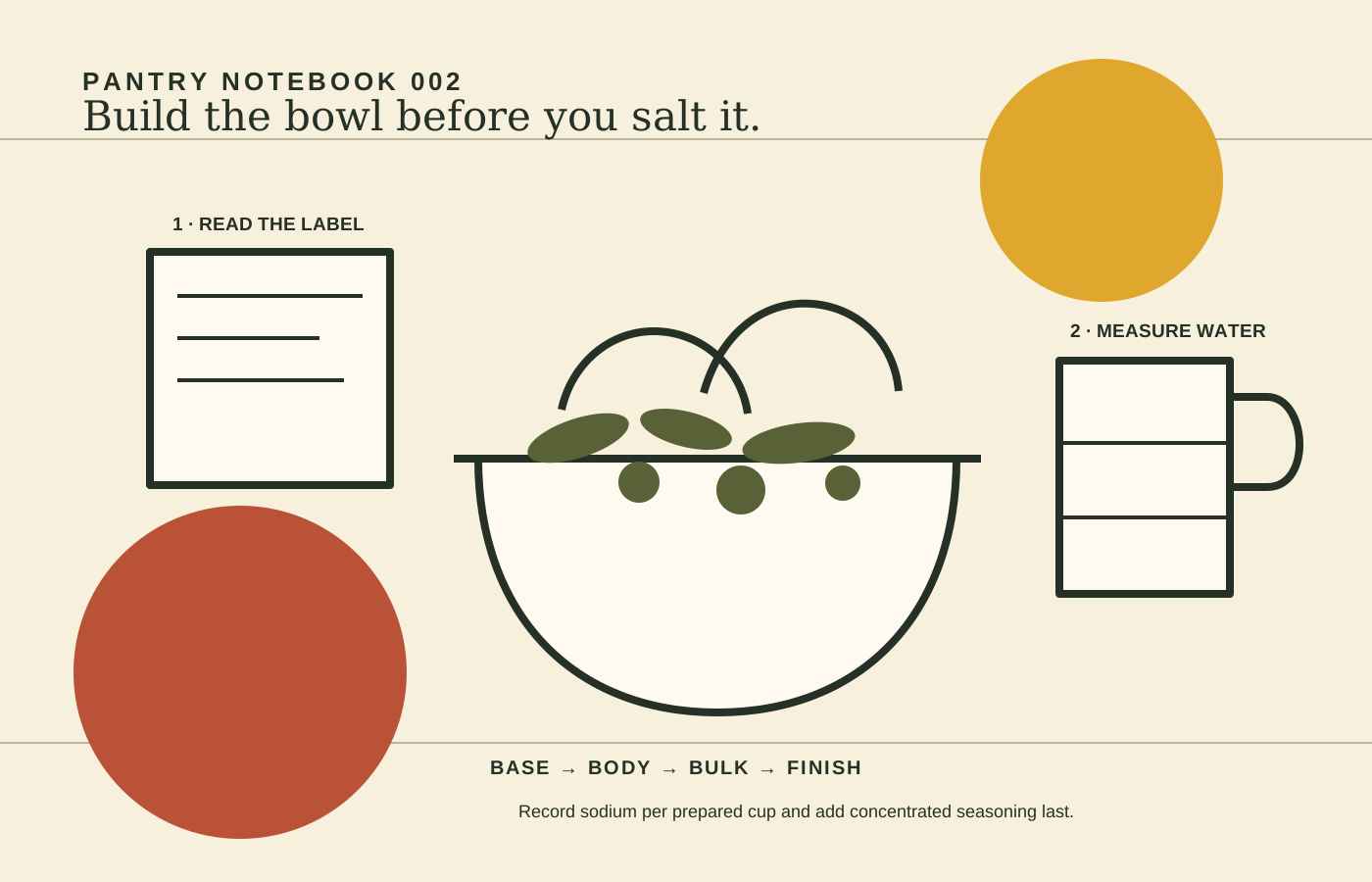
Pantry notebook 002 · October 8, 2026
Map water, texture, sodium, and cooking instructions before ingredients reach the pot. This four-part bowl matrix keeps concentrated seasoning until the final stage.
Build the soup plan →Pantry notebook 001 · September 26, 2026
Dry weight, serving size, and prepared yield answer different questions. Read the six label lines that reveal what a pouch contains, what it makes, and how handling changes after water is added.
Read the label audit →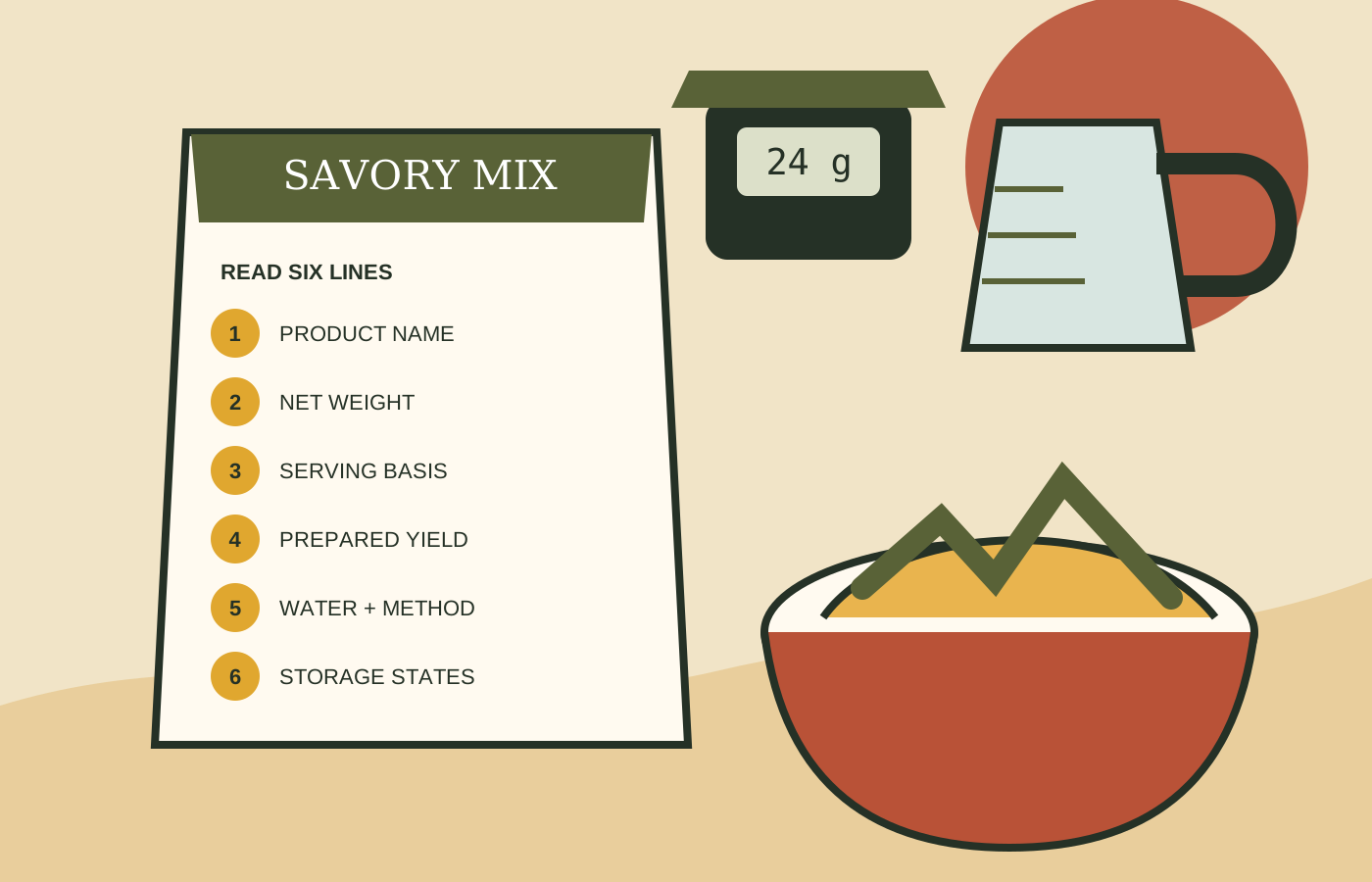
The aromatic test card
Record form, dry amount, water, time, cooking status, prepared yield, and the kitchen job for onion, garlic, or celery.
The approved newsletter below carries new ingredient files and pantry guidance.