Pantry notebook 001 · September 26, 2026
The savory pouch label audit
Dry weight is not dinner. Use six label lines to compare freeze-dried vegetables, mushrooms, broth starters, and savory mixes on the same basis.
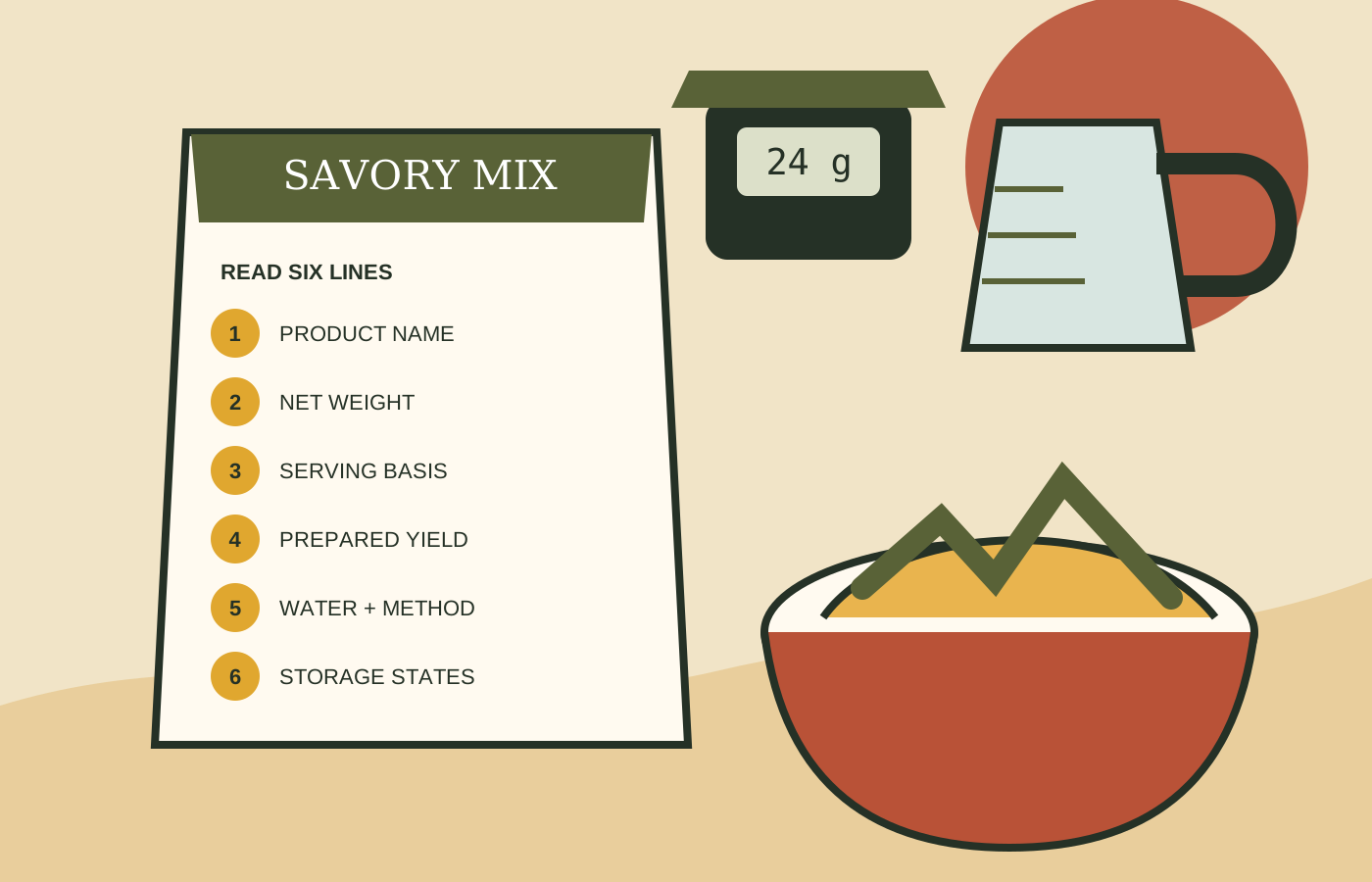
A light pouch can produce a useful pot of soup—or a salty cup with little texture. The front panel rarely tells you which. A better comparison begins on the back, where net weight, serving size, ingredients, preparation, and storage instructions describe different parts of the product.
That distinction matters more in autumn, when dried mushrooms, aromatics, vegetables, and broth powders move from occasional ingredients to weeknight soup components. The goal is not to crown one format as universally best. It is to identify what the package contains, what it becomes after preparation, and whether that result fits the meal you intend to make.
This is a label-reading and kitchen-planning framework for commercially packaged foods. Follow the specific package for water, time, cooking, allergens, shelf life, and storage. A generalized ratio should never replace manufacturer instructions.
Read these six lines before the claims
1. The exact product name
“Freeze-dried mushrooms,” “mushroom blend,” and “mushroom soup mix” describe different shopping jobs. A single ingredient can be a flexible building block. A seasoned blend may save steps but bring salt, starch, dairy, yeast extract, or other ingredients. Do not compare them as if they were interchangeable.
Look for a statement of identity and then read the ingredient list. Ingredients appear in descending order by weight. For a blend, the first few entries tell you whether the package is mostly the ingredient pictured on the front or mostly a carrier, seasoning, or base.
2. Net weight
Net weight is the amount of food in the sealed package. It is not the amount after water is added. It is useful for comparing two similar dry products, especially when cut size and formulation are alike, but it does not by itself predict bowl count or prepared volume.
3. Serving size and servings per container
The FDA explains that serving sizes reflect amounts people typically consume; they are not a recommendation for how much anyone should eat. Nutrition values usually apply to one labeled serving. Multiply deliberately when your recipe uses more than one serving.
For dry mixes, note whether the serving is expressed dry, prepared, or both. The FDA’s labeling guidance gives examples in which a dry amount is paired with the amount it makes after preparation. That parenthetical prepared amount is useful, but only when the package defines it.
4. Prepared yield
Prepared yield answers a different question: how much food results after the maker’s stated amount of water and preparation. Water creates volume but not more dry ingredients. Record both figures in your pantry notes:
If the label does not state a prepared yield, do not invent one from a competitor’s ratio. Cut size, porosity, formulation, and intended texture can change water uptake. Ask the manufacturer, or run a measured kitchen test and label the result as your own observation for that lot and method.
5. Preparation and cooking directions
“Add water” is incomplete information. Capture water volume, water temperature, rest time, whether simmering or further cooking is required, and whether the directions cover one serving or the entire pouch. USDA notes that freeze-dried food is rehydrated with water, but the package remains the authority for that specific food.
Ready-to-eat status also should not be guessed from the process name. Some dried components are designed to be cooked after rehydration. If the package requires cooking, treat that as a required step.
6. Storage in three states
Separate the unopened package, opened dry product, and prepared food. “Shelf stable” describes the properly packaged dry food under its labeled conditions. It does not mean a rehydrated bowl can sit at room temperature indefinitely. Look for instructions about resealing, moisture protection, refrigeration after opening or preparation, and the time allowed for use.
Put every candidate on the same basis
A comparison fails when one column uses dry grams and another uses prepared cups. Build a small worksheet and keep the units visible.
| Field | Copy from | What it helps answer |
|---|---|---|
| Product type | Statement of identity | Ingredient, seasoned blend, or complete meal? |
| Dry amount | Net weight | How much food is sealed in the pouch? |
| Serving basis | Nutrition Facts | What quantity do the nutrients describe? |
| Prepared yield | Directions or manufacturer | How much finished food does the stated method make? |
| Sodium | Nutrition Facts | How much is present on the same serving basis? |
| Water and time | Preparation directions | What resources and steps does preparation require? |
| After-opening rule | Storage statement | How should the remaining dry product be protected? |
Compare sodium after aligning servings
Broth starters and seasoned vegetables can have very different serving definitions. Convert only when the arithmetic is supported by the label. For example, if one serving makes one cup and another makes two cups, compare sodium per prepared cup. If prepared yield is not stated, keep the products in separate rows rather than forcing a false equivalence.
Count ingredients that change the job
Oil, starch, sugar, dairy, gluten-containing ingredients, and concentrated seasonings can affect the role a product plays in a recipe. An ingredient list is more informative than a vague front-panel phrase. Anyone managing an allergy should use the package’s current ingredient and allergen statements and contact the manufacturer when information is unclear.
Run one controlled bowl test
A repeatable test turns an unopened-package comparison into practical kitchen knowledge without pretending your result is universal.
- Record the lot and label. Photograph or transcribe the product name, lot code, date wording, dry amount used, and directions.
- Measure the dry portion by weight. A gram scale makes repeat tests easier than judging irregular pieces by volume.
- Use the labeled water and method. Measure water, temperature, rest or simmer time, and any added ingredients.
- Measure the finished result. Record drained or undrained yield as appropriate, keeping the method consistent.
- Evaluate the intended job. Note texture, flavor concentration, fines, and whether the ingredient works better as body, base, finish, or a complete bowl.
- Handle leftovers as prepared food. Date the container and follow the package plus standard leftover guidance.
Do not convert a single test into a shelf-life promise or a universal rehydration ratio. It is a preparation note for one product, lot, amount, and method.
A five-minute shelf audit
Can the pouch answer these questions?
- What exactly is the food?
- How much dry product is inside?
- What amount does one nutrition serving represent?
- Does the maker state prepared yield?
- What water, time, and cooking steps are required?
- What changes after opening and after adding water?
Once water enters, reset the clock
Freeze-drying and moisture-resistant packaging support shelf stability before preparation. Rehydration changes the food and its handling needs. USDA advises keeping shelf-stable foods cool and dry and following package directions. For prepared leftovers, FoodSafety.gov advises refrigeration within two hours—or one hour when exposed to temperatures above 90°F—and use within three to four days. Reheat leftovers to 165°F.
Use shallow containers so soup and other prepared foods cool promptly. If a package gives a shorter period or different handling rule, follow it. Discard food when package integrity is compromised or when instructions and storage history cannot support safe use; tasting is not a safety test.
A purchasing note for this preview catalog
Freeze Dried Savory currently publishes unbranded pantry briefs and education. Prices, inventory, checkout, branded claims, and availability remain disabled until supplier authorization and current product documentation are verified. When listings open, each one should show the exact ingredient statement, allergens, net weight, serving basis, preparation directions, storage language, and maker-stated yield rather than a generic category estimate.
Sources
Reviewed September 26, 2026. These primary sources support the general label and food-safety principles in this guide; the package remains controlling for a specific product.